
Panels That Lock Together Seam by Seam
Metal Roofing in the Twin Cities for Homes Replacing Worn Shingle Roofs or Damaged Metal Panels
A standing seam metal roof is built from long steel or aluminum panels joined at raised seams, with the fasteners hidden beneath the seam so nothing punctures the exposed surface. Barnhouse Exteriors installs, replaces, and repairs residential metal roofs for homeowners in the Twin Cities. It suits you if you are replacing a shingle roof for the second or third time, or if dented, loose, or corroded panels are letting water in.
Installation starts with removing the old roofing, repairing the deck, and laying ice and water barrier, underlayment, and ventilation. Panels are then measured to length, set with clips that allow the metal to expand and contract, and finished with trim and flashing at the eaves, valleys, walls, and ridge.
Start with a free metal roofing consultation to compare panel profiles, metals, and finishes.
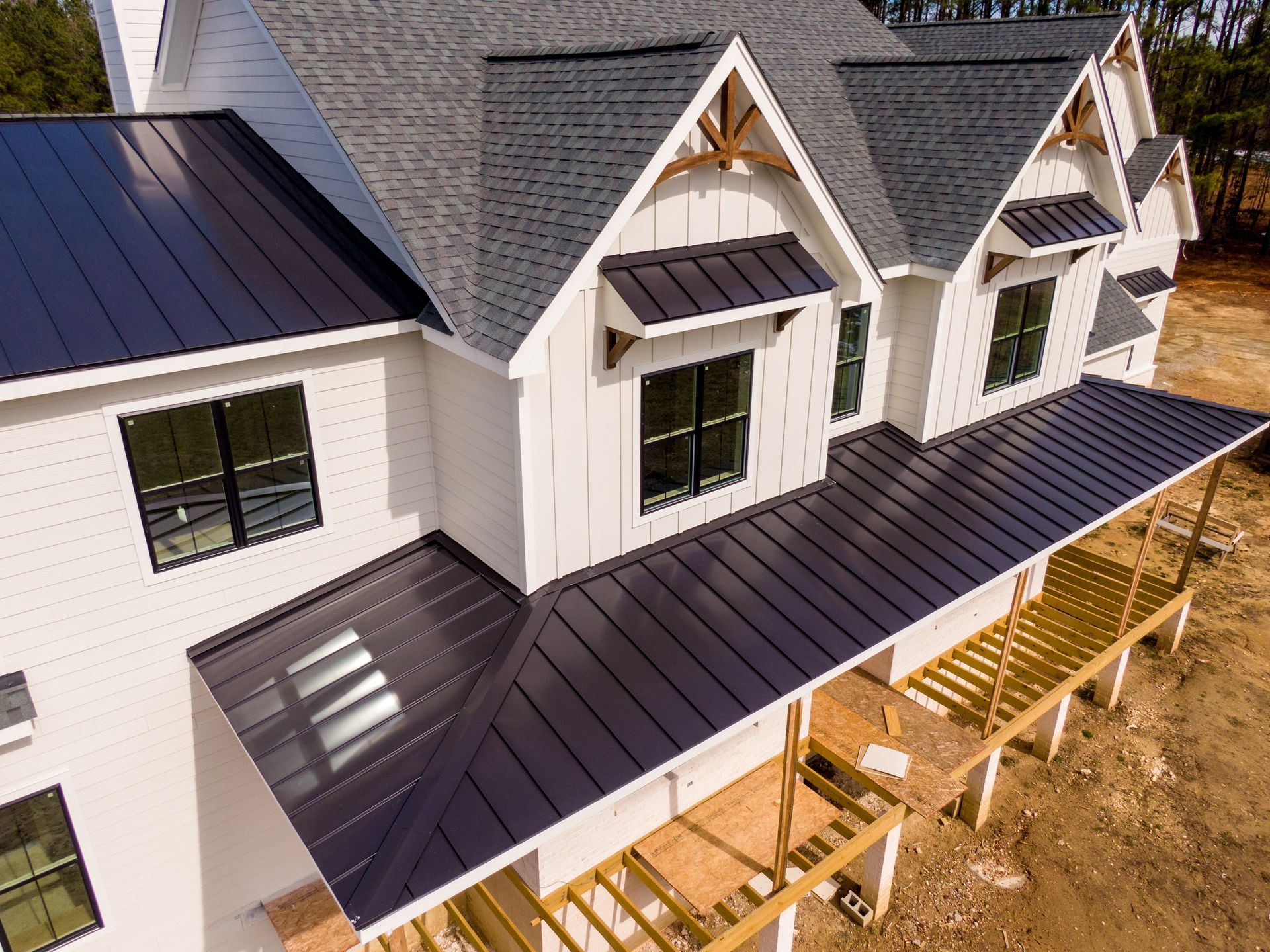
Why Concealed Fasteners and Floating Clips Matter
Exposed-fastener panels rely on rubber washers that can loosen as the metal moves, which is a common source of slow leaks. Standing seam systems use clips that let each panel slide slightly with temperature changes, keeping fasteners out of the water path. Steel works for most homes, while aluminum resists corrosion and weighs less.
After installation, you see clean, straight seam lines running from eave to ridge, and snow slides off instead of building up along the eaves. Panels stay flat without oil-canning ripples, and the finish holds its color with less upkeep than shingles.
Snow guards are often added above entries, decks, and walkways so sliding snow does not drop where people walk. Energy-efficient coatings reflect more sunlight than dark shingles, and manufacturer-backed warranties cover the panels and finish.
Questions About How Metal Roofs Are Installed
These answers explain the materials, methods, and details behind a residential metal roof.
What is the difference between standing seam and exposed-fastener metal roofing?
Standing seam panels are joined at raised seams with hidden clips, while exposed-fastener panels are screwed through the face. Standing seam has fewer penetrations and fewer points to maintain over time.
How is a metal roof flashed around chimneys and skylights?
Custom-bent flashing is fitted around each penetration and lapped so water flows over the panel below, not under it. Sealants serve as a backup, never as the primary water barrier.
Why does a metal roof need underlayment?
Condensation can form on the underside of metal panels, and the underlayment keeps that moisture off the roof deck. High-temperature synthetic underlayment holds up to the heat that builds under metal.
How do Twin Cities home styles work with metal roofing?
Metal fits modern homes with simple rooflines and traditional homes when paired with a profile and finish that suit the house. On Twin Cities homes with many valleys and dormers, each intersection gets custom trim, which adds detail work to the installation.
What should you check on a finished metal roof?
Sight along the seams for straight, parallel lines and look for flat panels without rippling. Trim at the eaves, rakes, and ridge should be tight, with no exposed screw heads on a standing seam system.
Barnhouse Exteriors handles metal roofing from inspection and storm repair through full standing seam installation in a wide selection of colors and finishes. Request a free estimate to see how a metal roof would look on your home.